27.11.2026
Daniel Kortus Wins the 2026 Climate Change Communication Award
He received the award at the first Central European Forum on Climate Change Communication, held in Prague on Thursday, November 26, 2026. The forum's keynote speaker was German climatologist and oceanographer Stefan Rahmstorf, who received the honorary "Inspiration from Abroad" award.
"I'm very happy about the award, and it means a lot to me, mainly because it's given by a jury made up of people who have been working on climate change much longer than I have. My biggest worry has always been whether I can talk about climate in a way that's easy to understand while still staying scientifically accurate. Coming from this jury, the award confirms for me that I'm managing to do that. It also motivates me to keep learning about the topic and to look for ways to engage people who don't normally take an interest in climate," he says. říká.

Daniel Kortus (still from his YouTube channel)
The Central European Forum on Climate Change Communication is a new platform that brings together scientists, journalists, communication experts, and representatives of public institutions and civil society. Its goal is to promote science-based, accessible communication about the broader context of climate change, strengthen trust in science, and create space for open dialogue among various stakeholders in the Czech Republic and the wider Central European region. The forum aims to help improve the quality of public debate, counter climate disinformation, and support cooperation in finding and communicating climate solutions.
The Central European Forum expands the activities associated with the Climate Change Communication Award, which has been presented jointly since 2019 by the United Nations Information Centre in Prague and the Learned Society of the Czech Republic. This year, the organizers decided to expand the project and transform it into a professional and networking platform for Central Europe. The Czech Technical University in Prague (CTU) has joined the project as a new partner, and the forum took place on its premises, at the Czech Institute of Informatics, Robotics and Cybernetics (CIIRC).
The forum's main guest was Professor Stefan Rahmstorf, a leading climatologist and oceanographer at the Potsdam Institute for Climate Impact Research (PIK) and the University of Potsdam (Germany). In his lecture, The AMOC and Beyond: Why Communicating Climate Risks Matters, he focused on possible changes in the Atlantic Meridional Overturning Circulation (AMOC), which includes the well-known Gulf Stream, and on the importance of explaining climate risks to the public in an accessible way.
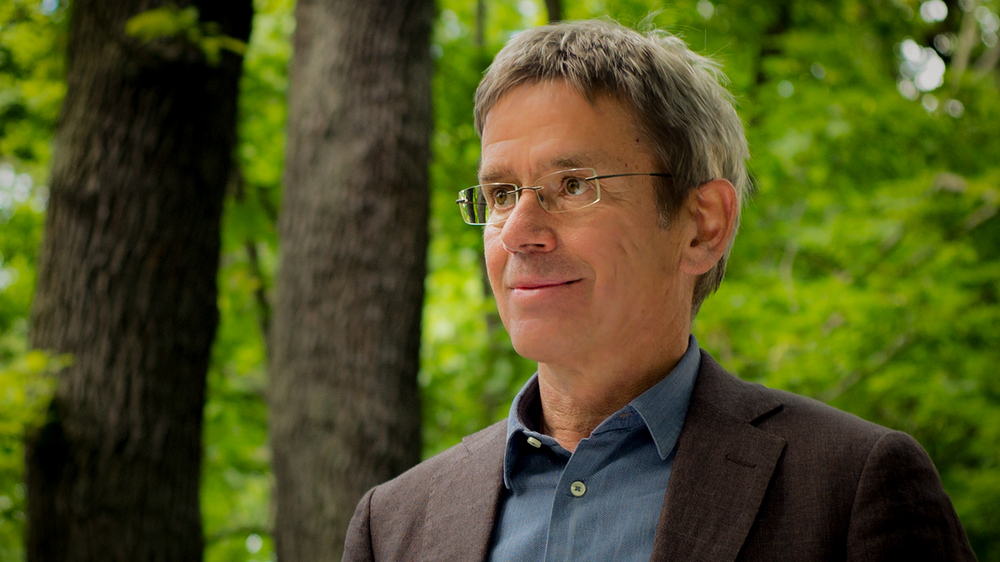
Stefan Rahmstorf, photo by Felix Amsel
"The climate crisis poses an existential threat to humanity. Global warming is accelerating, we are approaching the 1.5 °C warming limit set by the Paris Agreement, and the consequences of our emissions will persist for a thousand years. We have the technological means to end our dependence on fossil fuels and thus stop further global warming. But a massive disinformation campaign and the powerful lobbying influence of the fossil fuel industry are preventing humanity from responding adequately to this threat," explains Stefan Rahmstorf.
The program also included a presentation of the international SuPeRBE project, in which the University Centre for Energy Efficient Buildings (UCEEB) of CTU in Prague is a co-investigator. The project aims to develop methods and measures for adapting to and managing climate-related risks at various spatial scales (buildings, neighborhoods, and communities). "Climate change has concrete impacts on specific places, and that's exactly where solutions have to start. That's why SuPeRBE was created as a practical tool for cities and towns—to help them identify where buildings and neighborhoods are most vulnerable and to direct investment where it makes the most sense," explained Pavlína Žatecká of UCEEB CTU, one of the project's co-investigators, in her presentation at the forum.
Representatives of Fakta o klimatu (Climate Facts) and AMO Klima, an analytical team focused on various aspects of climate policy, presented their work in climate communication and information.
"The COP31 climate conference that just ended shows how hard it is to reach consensus among nearly 200 countries. But the science is clear. Our role, therefore, is to work with scientific and academic institutions to create an environment for communicating the latest findings in an accessible way, thereby opening the door to effective climate solutions," says Michal Broža, Director of the United Nations Information Centre in Prague.
Michal Pěchouček, Rector of CTU in Prague, adds: "Sustainability is one of the priorities I brought with me when I took office as Rector of CTU. I therefore consider it important that the university can now take part, alongside the Learned Society and the UN's Czech office, in a project that emphasizes sound communication about one of the greatest challenges of our time. CTU draws on knowledge from a range of technical fields to offer society concrete solutions with the potential to mitigate the impacts of climate change in practice."
Award to Be Named After Professor Pavel Jungwirth
The organizers also announced that, starting next year, the Climate Change Communication Award will bear the name of Professor Pavel Jungwirth, a world-renowned scientist from the Institute of Organic Chemistry and Biochemistry of the Czech Academy of Sciences (IOCB Prague). Professor Jungwirth was involved in founding the project in 2019 and, as Chair of the Learned Society of the Czech Republic, contributed to its development over many years. He passed away in July 2026. Naming the award after him is a tribute to his personal dedication, scientific integrity, and conviction that high-quality science communication is vital to society.
"The Learned Society of the Czech Republic has long supported accessible, science-based communication about climate change. Expanding the award into the Central European Forum is a natural continuation of this effort and of the legacy of Professor Pavel Jungwirth, whose name the award will bear starting next year," says Ivo Starý, Chair of the Learned Society.
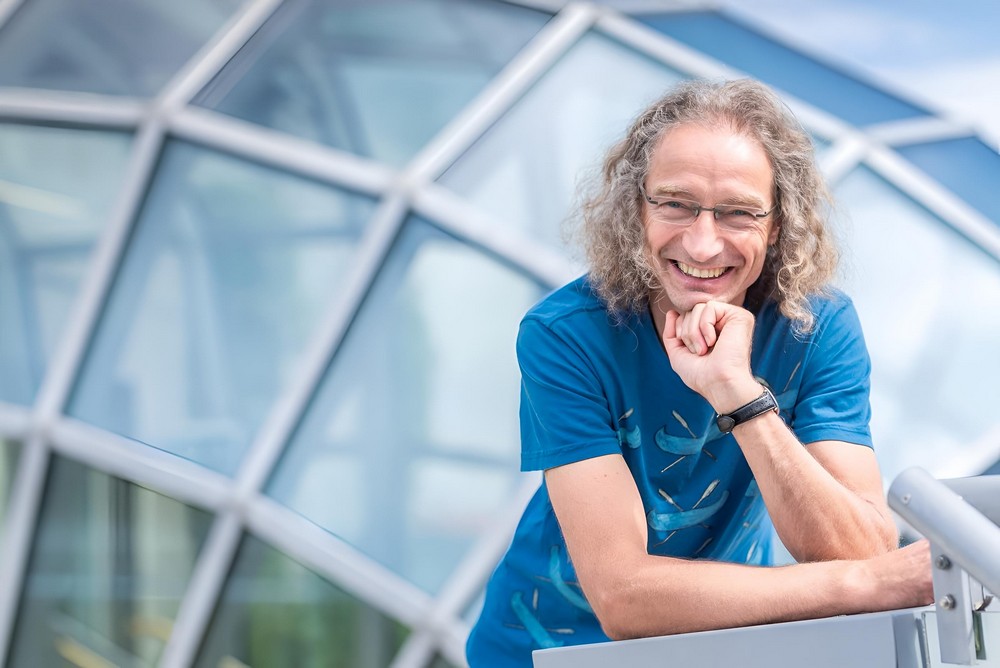
Pavel Jungwirth, photo by Jana Plavec, Czech Academy of Sciences
About the Project
The annual Climate Change Communication Award has been presented since 2019 by the United Nations Information Centre in Prague and the Learned Society of the Czech Republic. The winner is chosen by a nominating committee made up of representatives of major Czech institutions and experts working in the field of climate change. The award aims to promote reliable, factual public discussion grounded in current scientific knowledge, to help improve the quality of climate communication, and to encourage dialogue across disciplines and social groups.
The first Central European Forum on Climate Change Communication is organized by the United Nations Information Centre in Prague and the Learned Society of the Czech Republic in cooperation with the Czech Technical University in Prague.